
Israel's Targeted Assassinations
A Chronicle of State-Sanctioned Terror, Violence and Impunity

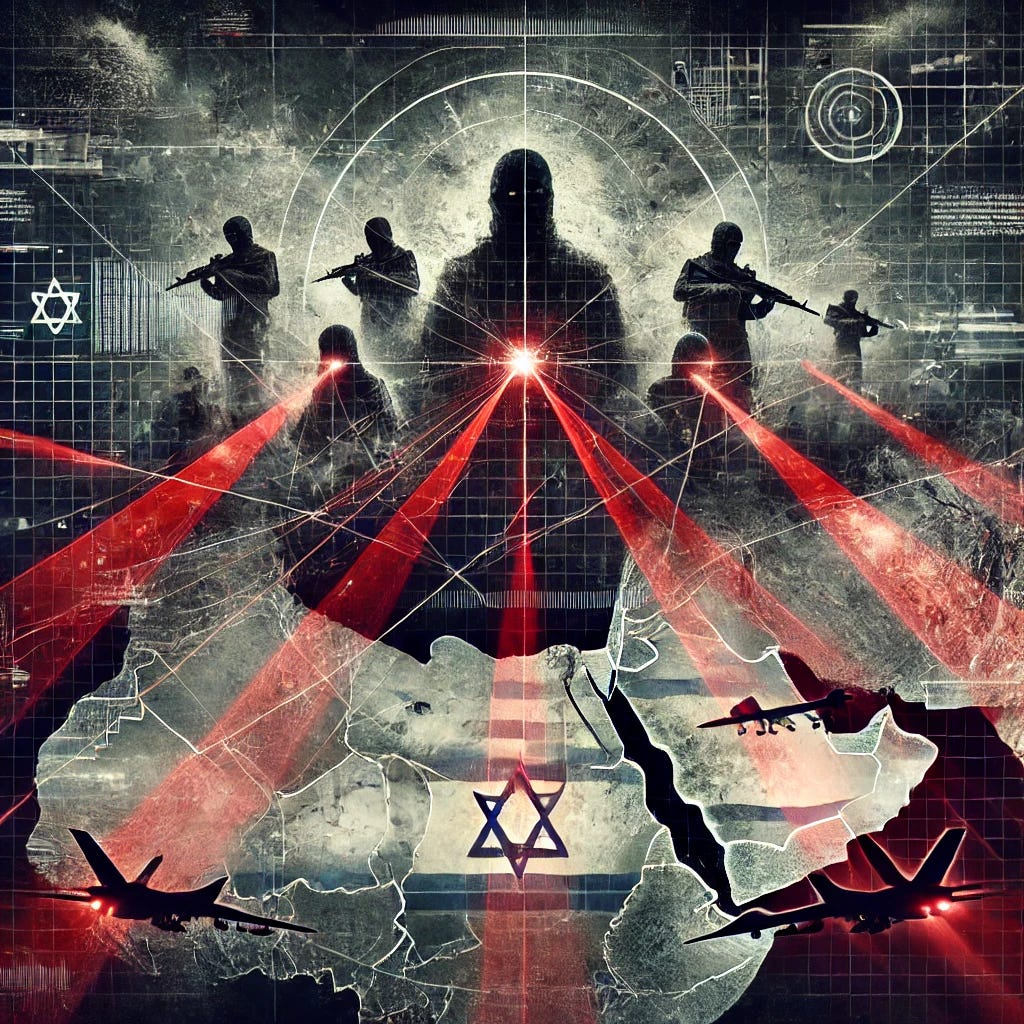
Israel's history is deeply intertwined with a calculated and ruthless policy of extrajudicial killings. This grim reality is a testament to its commitment to violence as a primary instrument of state power. From its pre-state origins to its current military operations, Israel has consistently employed targeted assassinations to eliminate perceived enemies. This is done with an alarming disregard for international law, human rights, and the sanctity of life.
🎙️ AI-Crafted Insights: Listen to the Companion Podcast for “Israels targeted assassinations.” This segment draws on a large amount of sources and leverages AI to expand the conversation around the book “Raise and kill first.” Join the journey into cutting-edge analysis and perspectives!
The Genesis of a Killing Machine: Pre-State Terrorism and the Seeds of Impunity
Even before its formal establishment in 1948, Zionist militias, the precursors to Israel's military and intelligence apparatus, were engaging in targeted killings against British officials and Palestinians labeled as collaborators. This early embrace of violence as a political tool laid the foundation for a culture of impunity. A culture that would come to define Israel's approach to security and its interactions with those deemed a threat.
The assassination of UN mediator Folke Bernadotte in 1948, just months after Israel's declaration of independence, served as a chilling signal of the regime's willingness to resort to extrajudicial killings on the international stage. This brazen act, met with a shocking lack of international condemnation, emboldened Israel's leadership and set a dangerous precedent for future transgressions.
The Mossad: Institutionalising State-Sponsored Terrorism
The creation of the Mossad, Israel's foreign intelligence service, in 1949 marked a turning point in the institutionalization of its assassination program. Tasked with protecting Israel's interests abroad, the Mossad quickly developed a reputation for ruthlessness and efficiency, carrying out covert operations and targeted killings across the globe with little accountability or oversight.
The Mossad's early operations often involved the recruitment of former Nazis and collaborators, exploiting their expertise in espionage and violence to further Israel's goals. This cynical alliance with individuals responsible for some of history's most horrific crimes underscores the moral bankruptcy at the heart of Israel's security apparatus.
Operation Wrath of God: A Global Campaign of Terror
The 1972 Munich Massacre, where Palestinian militants killed eleven Israeli athletes, provided Israel with the pretext to launch "Operation Wrath of God." A global assassination campaign targeting those believed to be involved in the attack. This operation, far from being a measured response to a horrific crime, quickly spiraled into a series of extrajudicial killings, misidentifications, and the cold-blooded murder of innocent civilians.
The Lillehammer Affair in 1973, where Mossad agents mistakenly killed a Moroccan waiter in Norway after misidentifying him as a Palestinian militant, exposed the recklessness and incompetence that plagued Operation Wrath of God. Despite international condemnation and diplomatic fallout, Israel refused to acknowledge its culpability, further solidifying its image as a rogue state operating outside the bounds of international law.
Lebanon 1982: State Terror on Full Display
Israel's 1982 invasion of Lebanon provided further evidence of its willingness to employ brutal tactics, including targeted assassinations and indiscriminate violence against civilians. The Sabra and Shatila massacre, where Israeli-backed Phalangist militias slaughtered hundreds of Palestinian refugees in Beirut, stands as a horrifying testament to Israel's callous disregard for human life.
The deliberate targeting of Palestinian civilians and infrastructure during the Lebanon War, as well as the collaboration with notoriously brutal militias, revealed the true nature of Israel's military doctrine: a willingness to inflict maximum suffering on those deemed enemies, even at the cost of innocent lives.
The Second Intifada: Industrializing Death from the Skies
The outbreak of the Second Intifada in 2000 marked a new era in Israel's assassination policy, with targeted killings becoming an almost daily occurrence. The development and deployment of sophisticated military technologies, including helicopter gunships and armed drones, allowed Israel to industrialize death from the skies, striking with impunity at targets in densely populated Palestinian areas.
The use of these weapons systems, often in crowded urban environments, resulted in the deaths of countless Palestinian civilians, including women and children. The chillingly euphemistic term "collateral damage" became a convenient shield for Israel's indiscriminate use of force, masking the human cost of its relentless pursuit of perceived enemies.
The Assassination of Sheikh Yassin: Crossing a Moral Rubicon
The assassination of Sheikh Ahmed Yassin, the spiritual leader of Hamas, in 2004 marked a moral nadir in Israel's long history of extrajudicial killings. This deliberate targeting of a wheelchair-bound religious figure, widely respected within the Palestinian community, sparked international outrage and condemnation, further isolating Israel on the world stage.
The killing of Sheikh Yassin, carried out with cold-blooded precision by an Israeli helicopter gunship, sent a clear message: Israel was prepared to eliminate anyone it deemed a threat, regardless of their status or vulnerability. This act of state terror removed any pretense of moral justification for Israel's assassination program, exposing its underlying foundation of ruthless pragmatism and a willingness to operate outside the bounds of accepted norms of warfare.
Operation Cast Lead and Beyond: Unchecked Aggression and a Culture of Impunity
Israel's 2008-2009 assault on Gaza, known as Operation Cast Lead, witnessed a horrifying escalation in the use of targeted killings and indiscriminate violence against civilians. The deliberate bombing of homes, schools, and hospitals, as well as the widespread use of white phosphorus munitions, resulted in the deaths of over 1,400 Palestinians, the vast majority of whom were civilians.
The aftermath of Operation Cast Lead saw no meaningful accountability for Israel's actions, with the international community largely accepting Israel's self-serving narratives of self-defense and proportionality. This lack of consequences emboldened Israel's leadership, paving the way for further acts of aggression, including the 2012 and 2014 assaults on Gaza, and the ongoing campaign of airstrikes and targeted killings in Syria and Lebanon.
2023-2024: A New Wave of Targeted Killings
Following the Hamas attack on Israel on October 7, 2023, Israel launched a wave of assassinations targeting senior Hamas and Hezbollah officials. The assassinations have taken place in Gaza, Lebanon, Syria, and even Iran. Some of the most prominent figures killed include:
Mohammed Deif, the top Hamas military commander, was killed in a strike in Gaza on July 12, 2024.
Ismail Haniyeh, the head of the Hamas political office, was killed in Tehran on July 31, 2024.
Fuad Shukr, a top Hezbollah military commander, was killed in an airstrike in Beirut on July 30, 2024.
Ibrahim Aqil, the commander of Hezbollah’s elite Radwan unit, was killed in an Israeli airstrike in Beirut on September 20, 2024.
Nabil Kaouk, the deputy head of Hezbollah's Central Council, was killed on September 28, 2024, making him the seventh senior Hezbollah leader assassinated in Israeli strikes in a little over a week.
Hassan Nasrallah, the leader and one of the founding members of Hezbollah, was killed in an Israeli airstrike in a southern suburb of Beirut on September 28, 2024.
Hashem Safieddine, the likely successor to Hassan Nasrallah, was killed in a confrontation with Israel on October 8, 2024.
The assassinations have significantly escalated tensions in the region. In retaliation for the killing of two senior IRGC commanders on April 1, 2024, Iran launched an unprecedented attack on Israel. Hezbollah also retaliated for the deaths of two of its top commanders, launching its largest salvos of rockets into Israel since the October 7 attack.
The Gaza War: A Humanitarian Catastrophe Unfolding
The assassinations have been accompanied by a brutal Israeli military campaign in Gaza. Palestinian officials report that Israeli airstrikes have killed numerous civilians, including those sheltering in schools designated as humanitarian zones.
The situation in Gaza is dire. The ongoing conflict has resulted in a humanitarian catastrophe, with widespread displacement, shortages of food and medicine, and a collapsing healthcare system. The international community has condemned the violence but has failed to take meaningful action to stop it.
The Moral and Legal Reckoning: A Stain on Humanity's Conscience
Israel's persistent reliance on extrajudicial killings has profound moral and legal implications. These state-sanctioned murders, carried out without due process or the possibility of a fair trial, represent a fundamental assault on human rights, the rule of law, and the very fabric of civilized society.
The Israeli Supreme Court's 2006 ruling legalizing targeted killings, based on a vague and easily manipulated "imminent threat" standard, has done little to curb the excesses of Israel's assassination program. This judicial stamp of approval has only served to legitimize a policy that is inherently unlawful and morally reprehensible.
The Complicity of Silence: The Role of the International Community
The international community's failure to hold Israel accountable for its crimes is a shameful indictment of its commitment to justice and human rights. The silence and inaction of world leaders, particularly those in the United States and Europe, have emboldened Israel to act with impunity, secure in the knowledge that its actions will carry no meaningful consequences.
The "war on terror" narrative, cynically manipulated by both Israel and its allies, has provided a convenient smokescreen for these atrocities, allowing states to engage in extrajudicial killings and other violations of international law under the guise of national security. This dangerous erosion of legal and moral norms poses a grave threat to the international order and undermines the very foundations of a just and peaceful world.
The Legacy of Assassination: A Cycle of Violence and a Future Foreclosed
Israel's assassination policy, far from achieving its stated goals of security and deterrence, has only served to perpetuate a cycle of violence, deepen the divide between Israelis and Palestinians, and undermine the possibility of a just and lasting peace.
The targeted killings of Palestinian leaders and militants have not only failed to eradicate resistance; they have often backfired, inspiring new waves of recruits and fueling further radicalization. The deaths of innocent civilians, the inevitable byproduct of Israel's indiscriminate use of force, have further inflamed Palestinian anger and resentment, creating a breeding ground for future conflict.
Israel's reliance on assassination as a primary tool of state policy represents a failure of imagination and a bankrupt political strategy. It is a testament to the regime's inability to envision a future beyond perpetual conflict, where security is built not on violence and intimidation, but on mutual respect, dialogue, and a genuine commitment to justice and reconciliation.
The Urgent Need for Accountability: Breaking the Cycle of Impunity
The international community has a moral and legal obligation to hold Israel accountable for its systematic violations of human rights and international law. The culture of impunity that has allowed Israel to act with such blatant disregard for basic principles of justice must be dismantled.
The first step towards accountability must be an independent and impartial investigation into Israel's assassination program, documenting the extent of the crimes committed, identifying those responsible, and recommending appropriate legal action.
The International Criminal Court (ICC) must be empowered to investigate and prosecute those responsible for war crimes and crimes against humanity, including those involved in Israel's extrajudicial killings.
Targeted sanctions, arms embargoes, and other measures must be implemented against individuals and institutions complicit in Israel's crimes, including those within the military, intelligence, and political establishment.
Conclusion
Israel's assassination campaign, spanning decades and countless victims, stands as a stark reminder of the dangers of embracing extrajudicial violence as a tool of state policy. The lack of accountability, the disregard for civilian lives, and the erosion of moral and legal norms have created a dangerous precedent that threatens not only the prospects for peace in the region but also the very fabric of Israeli society.
Until Israel abandons this policy and embraces a genuine commitment to peace and justice, based on respect for human rights and the rule of law, the cycle of violence will continue, leaving a legacy of pain, suffering, and enduring animosity. The international community, particularly the United States and the United Kingdom, must cease their tacit approval of these actions and hold Israel accountable for its violations of international law and norms. Only then can there be hope for a future in which all people in the region can live in peace and security, free from the fear of extrajudicial violence.
Watch my interviews with global though leaders on Youtube: