There’s a strange paradox in our time.
We live in the most information-saturated era in human history, yet many people feel they understand less and less about what is actually happening around them. Wars appear suddenly. Narratives solidify overnight. Entire populations seem to arrive at identical conclusions within days—sometimes hours—about events that are complex, distant, and difficult to verify.
And if you pause for a moment and ask yourself how that happens, you quickly run into an uncomfortable question:
Who is shaping the story you think you’re understanding?
That question sits at the center of this conversation.
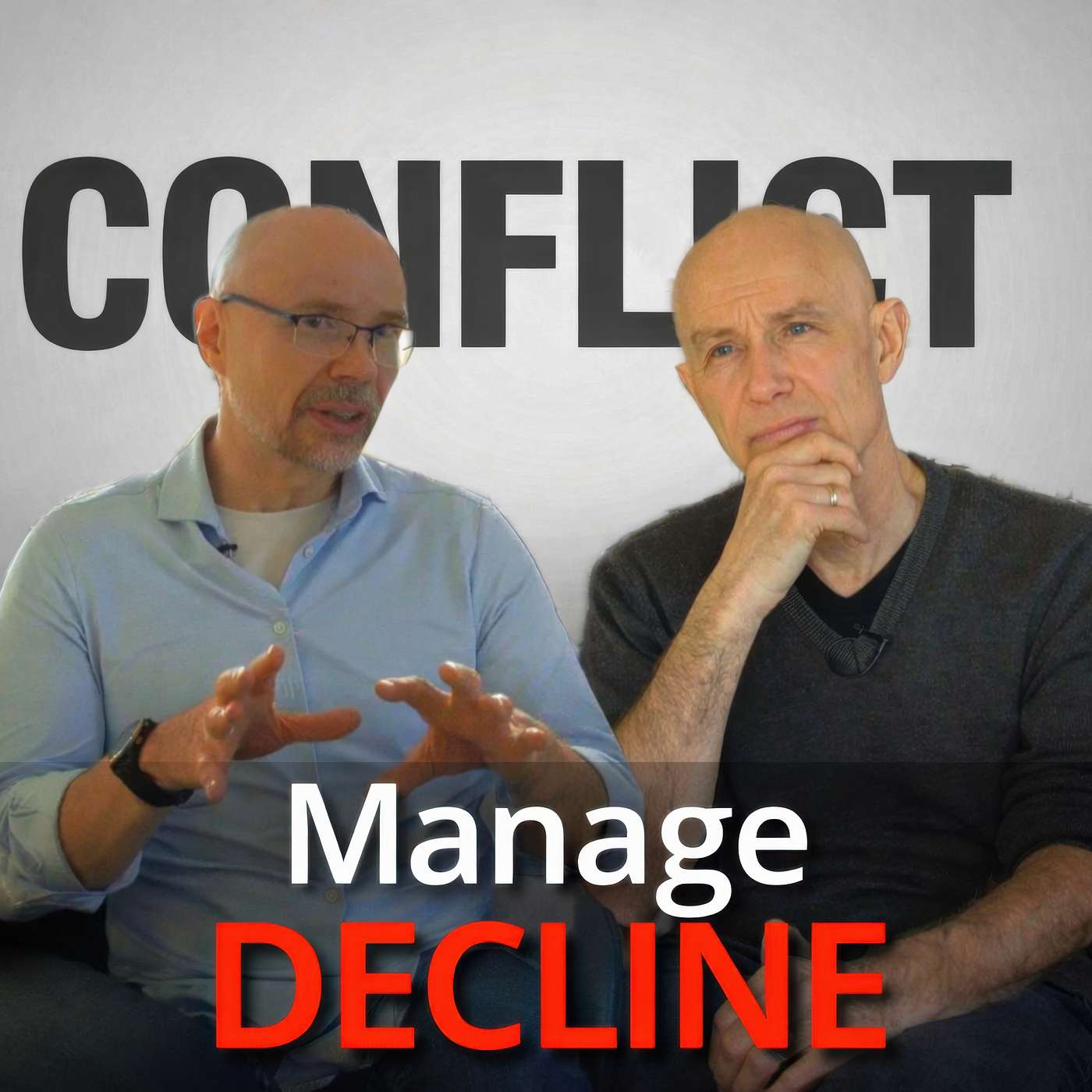
In this interview I speak with the Dutch data analyst and peace activist Pieter Rambags who has spent years examining the intersection of data systems, propaganda, political messaging, and modern warfare. His background is not in journalism or politics, but in something far more revealing: the world of information systems and behavioral influence—the machinery behind how narratives travel, how perceptions are shaped, and how entire societies can be nudged in one direction or another.
What begins as a discussion about data and cognitive bias quickly expands into something much larger.
We talk about the wars that dominate today’s headlines—from Gaza to Ukraine—but not in the usual way. Instead of debating which side is right or wrong, the conversation looks at something more fundamental: the architecture of narrative itself. How public consent is built. How certain frames become dominant. And why some events become global moral crises while others barely register in public discourse.
But the most interesting part of this conversation is not the geopolitics.
It’s the psychology.
Because the uncomfortable truth is that propaganda today rarely looks like propaganda. It does not arrive in the form of obvious state broadcasts or crude slogans. Modern influence is quieter, subtler, and far more sophisticated. It flows through algorithms, headlines, emotional framing, and the constant repetition of seemingly self-evident “truths.”
And that raises a deeply personal question for anyone consuming news today:
How certain are we that the stories we believe are actually our own conclusions?
At one point in the conversation, my guest describes a moment of realization that changed his entire perspective on politics and media. It wasn’t a dramatic revelation or a secret document. It was something much simpler—and therefore far more unsettling. The realization that once you understand the mechanics of influence, you begin to see the same patterns everywhere.
In headlines.
In speeches.
In the emotional language used to frame conflicts.
Once you see it, you can’t really unsee it.
And that’s where this discussion becomes particularly relevant for the audience here. Because the goal of this conversation is not to convince you of a particular political position. It’s something much more useful than that.
It’s about learning to recognize the machinery behind the narrative.
Whether you agree with every claim made in this interview is almost beside the point. The real value lies in the perspective it offers—a reminder that before we argue about conclusions, we should first examine how those conclusions are being presented to us.
In a time when global conflicts dominate the news cycle and public opinion is mobilized at extraordinary speed, that might be one of the most important skills any citizen can develop.
So if you watch this interview, don’t just listen for the arguments.
Listen for the patterns.
Because sometimes the most revealing thing in a political discussion is not what people say about a conflict.
It’s what the conversation reveals about how we are taught to see the world in the first place.